Thinking about these two: in both the complexity of the human brain is a threshold that, once crossed, becomes a point of no return, with a future uncertain. In Kurzweil, superhuman machine intelligence will exceed human intelligence by the year 2030. The results, he says, on the other side, are unpredictable.
Mckenna, describes the human brain as THE most complex organization in the known universe. However, as novelty and complexity accelerate toward a curve of infinite exponential growth, we will approach an omega point (12/21/2012) presaged by the occurrence of pure novelty where anything and everything conceivable will appear in the human imagination, and then there will be the end of history
Friday, August 8, 2008


Wednesday, August 6, 2008
Heidegger on Art
The Kurzweil/transhuman issue continues to haunt me. It's not that I'm against "improving" the species, nor do I want to be stuck in the endless present. The issue is what enhances our humanity qua human "essence", and what limits our being such as in brave new world where everyone is efficiently designed to fulfill their role as consumers and workers in the year of our ford.
Reading Heidegger, and understanding very little, I see an opening. In his concept of the function of art as a way of "making coherent the scattered practices of the group and turning them into possibilities for action and for relations to each other". In this way we can experience the integration of these technologies as a cultural evolution given meaning by the work of art.
Big question: Heidegger's examples are such things as a Greek temple, and a medieval cathedral. What, in our day, can serve a similar role? Internet?
Reading Heidegger, and understanding very little, I see an opening. In his concept of the function of art as a way of "making coherent the scattered practices of the group and turning them into possibilities for action and for relations to each other". In this way we can experience the integration of these technologies as a cultural evolution given meaning by the work of art.
Big question: Heidegger's examples are such things as a Greek temple, and a medieval cathedral. What, in our day, can serve a similar role? Internet?
Saturday, July 19, 2008
paideia
Just started Cormac McCarthy's The Road. I am about 50 pages into it, and something very drastic must have happened, it's all very bleak and lifeless. What kind of cowards would have precipitated this devastation? Some neocon chest thumping?
All memory, all history, even knowledge will have vanished. What is the point of history? What should a philosophy of it be? Should it not be a sustainable life congruent with the dignity of man? Check out this quote:
From Werner Jaeger's Paideia:
"In the funeral speech over the dead Athenian soldiers, which Thucydides wrote soon after the end of the war and put in Pericles' mouth, he still saw Athens as lit by the last beams of that radiance. Through his words there still glows something of the ardor of that brief but brilliant dream, well worthy of the Athenian genius-the dream of building a state so skillfully that it might keep strength and spirit in perpetual equipoise. When he composed that speech, he already knew the paradoxical truth which all his generation had to learn: that even the most solid of earthly powers must vanish into thin air, and that only the seemingly brittle splendor of the spirit can long endure"
All memory, all history, even knowledge will have vanished. What is the point of history? What should a philosophy of it be? Should it not be a sustainable life congruent with the dignity of man? Check out this quote:
From Werner Jaeger's Paideia:
"In the funeral speech over the dead Athenian soldiers, which Thucydides wrote soon after the end of the war and put in Pericles' mouth, he still saw Athens as lit by the last beams of that radiance. Through his words there still glows something of the ardor of that brief but brilliant dream, well worthy of the Athenian genius-the dream of building a state so skillfully that it might keep strength and spirit in perpetual equipoise. When he composed that speech, he already knew the paradoxical truth which all his generation had to learn: that even the most solid of earthly powers must vanish into thin air, and that only the seemingly brittle splendor of the spirit can long endure"
Tuesday, July 15, 2008
Man only has history
What is it that defines human beings? Nothing in particular. We may say with the existentialists that while man has no essence, he has a history. As historical beings, we have a consciousness of our past, and we are aware through other sources of the history of our kind. That sum total of experience is what it means to be human. What can such histories give us in the face of man/machine hybrids who will do everything more intelligently and efficiently. Even writing the words on this page better.
While power gathers toward the powerful, those cognizant of human history may realize that the universe is still too full of unknowns to say that there is a definable way to "correct" evolution, to make it more efficient. This is what I am learning from William James' pluralism.
Wednesday, July 9, 2008
a thought on kurzweil and consciousness
I am not a Luddite, but I can't grasp that biological intelligence can not only be replicated but exceeded by machine intelligence. Granted, there will come a time when machine intelligence can exceed humans in 99% of our observable mental functions.
How is much of this possible? What Kurzweil cites as reverse engineering of the brain. While that may replicate our intelligence in its emotional context, could it developed in a non biological entity?
While we may be, as one Zen Master would have it, not really selves but bundles of habits, still there is at least the possibility of change, the motive toward which is derived from emotion, imagination, etc. William James cites approvingly in his Principles a quote from Shadworth Hodgson which basically states that when he looks at his own consciousness, he may or may not find thoughts, but certainly finds a stream of emotions.
What I would like to find out is the intimate connection between emotion and discovery. I would predict that a reverse engineered brain in a machine would eventually become totally predictable in its responses to situations.
How is much of this possible? What Kurzweil cites as reverse engineering of the brain. While that may replicate our intelligence in its emotional context, could it developed in a non biological entity?
While we may be, as one Zen Master would have it, not really selves but bundles of habits, still there is at least the possibility of change, the motive toward which is derived from emotion, imagination, etc. William James cites approvingly in his Principles a quote from Shadworth Hodgson which basically states that when he looks at his own consciousness, he may or may not find thoughts, but certainly finds a stream of emotions.
What I would like to find out is the intimate connection between emotion and discovery. I would predict that a reverse engineered brain in a machine would eventually become totally predictable in its responses to situations.
Sunday, July 6, 2008
the singularity
I haven't been able to download the BBC video, but it explains everything. Use the BBC link for all kinds of information on the documentary:
http://www.bbc.co.uk/sn/tvradio/programmes/horizon/broadband/tx/singularity/
I was watching the actual video on the Popular science website:
http://www.popsci.com/category/tags/kurzweil
Try them
http://www.bbc.co.uk/sn/tvradio/programmes/horizon/broadband/tx/singularity/
I was watching the actual video on the Popular science website:
http://www.popsci.com/category/tags/kurzweil
Try them
William James, Nihilism, and Kurzweil
The fundamental philosophical question of the 21st century, according to Kurzweil, is to come to an understanding of what it means to be human. The subtitle of his book, The Age of Spiritual Machines, is "when computers exceed human intelligence". Without going into the range of machine capabilities that Kurzweil projects by the end of the century, the main idea is that in time, we are more and more acquiring the means to create a superior species, whether entirely machine, or man-machine hybrid. The Luddites among us will offer the initial resistance, and perhaps successfully block publicly funded research, as we see in the stem cell controversy.
What nags at the back of my mind is that, no matter what kind of sophisticated argument we could mount against human beings modifying their own structure, there seems to be an inevitability that once a capability is created, it will be used. There is something irresistible about it. Add to that the possibility of big private money going into the research in order to get proprietary results, it almost seems like philosophical argument is irrelevant. We will have a brave new world. But why label it such?
There is something to be said for reflecting on the identity of man, and fighting for it. I haven't done enough research to know about the possibilities that Kurzweil has so glowing described in his book. We are indeed beings who grow technologies like turtle grow shells. And come to think of it, maybe even technology, even Clarke's nightmare idea of Living Software hookup to our brains and body parts, is not the issue. Maybe the issue, in this era of world culture, globalization, is what Nietzsche described over a 100 years ago: rise of science and secularism really means God is dead, we have killed him, and there are no replacements for what religious orthodoxies offered us.
This is the problem of nihilism. Nietzsche confronted it. William James confronted it. It exists in the hollowness of our mindless entertainment and consumerist culture. So what if we create a Brave New World? There is no other point to human life except ever expanding consumption, right?
Is this the end of history, then?
What nags at the back of my mind is that, no matter what kind of sophisticated argument we could mount against human beings modifying their own structure, there seems to be an inevitability that once a capability is created, it will be used. There is something irresistible about it. Add to that the possibility of big private money going into the research in order to get proprietary results, it almost seems like philosophical argument is irrelevant. We will have a brave new world. But why label it such?
There is something to be said for reflecting on the identity of man, and fighting for it. I haven't done enough research to know about the possibilities that Kurzweil has so glowing described in his book. We are indeed beings who grow technologies like turtle grow shells. And come to think of it, maybe even technology, even Clarke's nightmare idea of Living Software hookup to our brains and body parts, is not the issue. Maybe the issue, in this era of world culture, globalization, is what Nietzsche described over a 100 years ago: rise of science and secularism really means God is dead, we have killed him, and there are no replacements for what religious orthodoxies offered us.
This is the problem of nihilism. Nietzsche confronted it. William James confronted it. It exists in the hollowness of our mindless entertainment and consumerist culture. So what if we create a Brave New World? There is no other point to human life except ever expanding consumption, right?
Is this the end of history, then?
Friday, July 4, 2008
Notes on Richard Clarke and Breakpoint
Everything I read or see now nudges my thinking about history one way or the other. For instance, the other night I saw a movie, called The Sentinel, concerning an assassination plot against the President, one that depended on a mole with the Secret Service. As the assassination was unfolding, the mole was leading the President through the kitchen to the designated point for the kill. Historically, the assassination may have had some political effects, probably transient; the chef in the kitchen would not like be affected one way or the other. So what really drives historical change?
Yesterday I finished Richard Clarke's Breakpoint. The plot involves the destruction of selected infrastructure: internet cables and satellites; electric power grids; computer research labs about to be hooked up world wide; hedge fund owners' robotic dogs. A thesis of the book is that we really are on verge of melding human being and technology: "living software"-- machine written code that corrects human written software and is self correcting; reverse engineering of the brain to allow more brain-computer interface. Oh, I forgot, the rich were paying $100,000 to have their babies fitted with 2 extra chromosomes, which would allow them more traits of intelligence and immortality.
In the book the new technologies were restricted to the US, Japan and Europe. We could also extend this to say that the most benefits would go the wealthy elites in these areas, thereby creating an effective master race that rules the technology and the unmodified, inferior humans left to do the grunt work of picking fruit, and other manual labor that still could not be accomplished by machine.
Is there something inherent in this technology that must continue until we have created a BORG like master race to rule the Universe. Is this not the culmination of Nietzsche's Will to Power? And once in motion, can anything be done to stop it? Is this not the true driver of history?
.
Yesterday I finished Richard Clarke's Breakpoint. The plot involves the destruction of selected infrastructure: internet cables and satellites; electric power grids; computer research labs about to be hooked up world wide; hedge fund owners' robotic dogs. A thesis of the book is that we really are on verge of melding human being and technology: "living software"-- machine written code that corrects human written software and is self correcting; reverse engineering of the brain to allow more brain-computer interface. Oh, I forgot, the rich were paying $100,000 to have their babies fitted with 2 extra chromosomes, which would allow them more traits of intelligence and immortality.
In the book the new technologies were restricted to the US, Japan and Europe. We could also extend this to say that the most benefits would go the wealthy elites in these areas, thereby creating an effective master race that rules the technology and the unmodified, inferior humans left to do the grunt work of picking fruit, and other manual labor that still could not be accomplished by machine.
Is there something inherent in this technology that must continue until we have created a BORG like master race to rule the Universe. Is this not the culmination of Nietzsche's Will to Power? And once in motion, can anything be done to stop it? Is this not the true driver of history?
.
Tuesday, June 24, 2008
Carrol Quigley
| Professor Quigley was a Globalist, he supported the idea NEW WORLD ORDER and wrote about it, he, unlike the elites, thought the people should know about it. "The powers of financial capitalism had another far reaching aim, nothing less than to create a world system of financial control in private hands able to dominate the political system of each country and the economy of the world as a whole. This system was to be controlled in a feudalist fashion by the central banks of the world acting in concert, by secret agreements, arrived at in frequent private meetings and conferences. The apex of the system was the Bank for International Settlements in Basle, Switzerland, a private bank owned and controlled by the worlds' central banks which were themselves private corporations. The growth of financial capitalism made possible a centralization of world economic control and use of this power for the direct benefit of financiers and the indirect injury of all other economic groups." Tragedy and Hope: A History of The World in Our Time (Macmillan Company, 1966,) Professor Carroll Quigley of Georgetown University "The Council on Foreign Relations is the American branch of a society which originated in England ... [and] ... believes national boundaries should be obliterated and one-world rule established." Dr. Carroll Quigley |
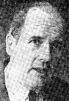 Author of Tragedy and Hope (tragedy is all the people who must suffer and die for the NWO, and the hope is the NEW WORLD ORDER )
Sunday, June 22, 2008
What is the world?
Currently thinking about what Ortega has said about the subject in Man and Crisis, p.39:
"...this world of collective beliefs...has a peculiar character not possessed by the the world of individual beliefs; namely it is valid for itself regardless of and sometimes despite our acceptance of it...the concepts of the times, the ambient convictions, are held by an anonymous subject who is no one in particular; this is society. And those concepts have force and validity even though I may not accept them--that force makes itself felt on me, even though negatively....I must take account of them in my life, just as I must take account of the wall which will not let me pass...
p. 40: "world is merely the system of convictions in force at that date"
Knowing this system of convictions would help explain the visible actions and internal monologue of, say, an inhabitant of Rome during the time of Marcus Aurelius. But is this system held in common by all classes, or are there slightly different map depending on wealth and class? And besides, what determines wealth and class, if not this system of convictions?
Quick thought about our times? Is evolutionary thought part of, or not part of our world? And in economics, is socialism dead because "it's been tried and has failed?"
"...this world of collective beliefs...has a peculiar character not possessed by the the world of individual beliefs; namely it is valid for itself regardless of and sometimes despite our acceptance of it...the concepts of the times, the ambient convictions, are held by an anonymous subject who is no one in particular; this is society. And those concepts have force and validity even though I may not accept them--that force makes itself felt on me, even though negatively....I must take account of them in my life, just as I must take account of the wall which will not let me pass...
p. 40: "world is merely the system of convictions in force at that date"
Knowing this system of convictions would help explain the visible actions and internal monologue of, say, an inhabitant of Rome during the time of Marcus Aurelius. But is this system held in common by all classes, or are there slightly different map depending on wealth and class? And besides, what determines wealth and class, if not this system of convictions?
Quick thought about our times? Is evolutionary thought part of, or not part of our world? And in economics, is socialism dead because "it's been tried and has failed?"
Subscribe to:
Posts (Atom)